
Let’s be honest—education is getting expensive, and not everyone has a money tree growing in their backyard. That’s where scholarships step in like a financial superhero 🦸♂️. If you’re asking, “How much scholarship can I get?”, you’re already on the right track.
The short truth? Scholarship amounts vary wildly. The long (and useful) truth? Let’s break it down step by step so you know exactly what to expect—and how to get the most you can.
What Does a Scholarship Actually Mean?
A scholarship is financial support given to students to help cover education costs. Unlike loans, you don’t have to pay it back. Sounds good already, right?
Types of Scholarships Explained
Scholarships come in many flavors:
- Merit-based
- Need-based
- Government-funded
- Private or corporate-funded
- International scholarships
Each type offers a different amount, depending on eligibility and purpose.
Why Scholarships Matter for Students
Think of scholarships as a bridge. Without them, many students never reach the other side of their educational dreams. They reduce stress, cut down debt, and open doors that money alone might close.
How Much Scholarship Can a Student Get on Average?
Here’s where it gets interesting.
Minimum and Maximum Scholarship Amounts
- Minimum: ₹1,000 to ₹5,000 per year
- Average: ₹10,000 to ₹50,000 per year
- High-value scholarships: ₹1 lakh to ₹10+ lakh per year
- Fully funded scholarships: Tuition + living + travel = ₹20–40 lakh (international)
One-Time vs Annual Scholarships
Some scholarships are paid once. Others renew every year. Annual scholarships are like a steady income stream—small but powerful over time.
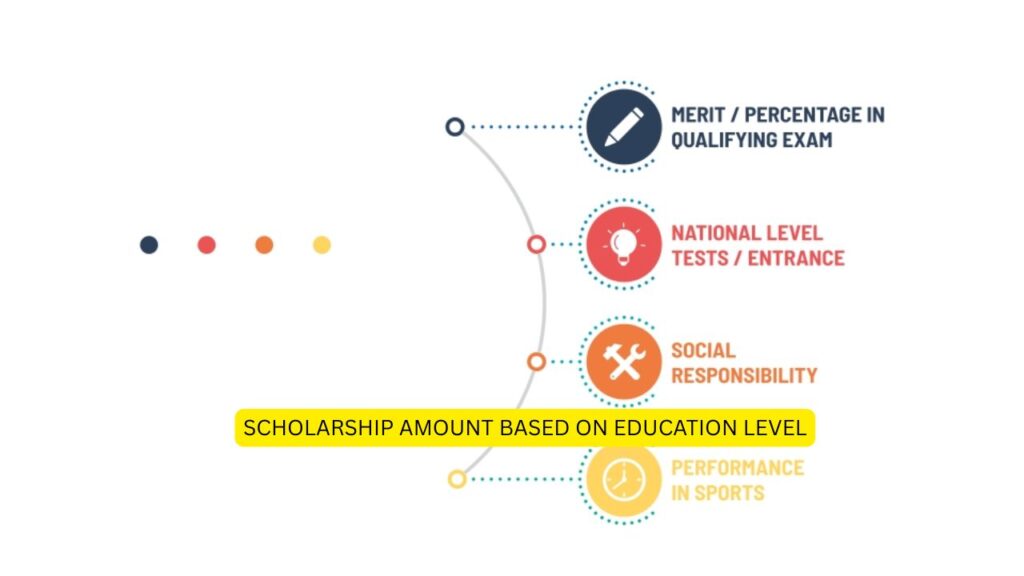
Scholarship Amount Based on Education Level
School-Level Scholarships
School students usually receive smaller amounts, but they still help.
Government Scholarships for School Students
- ₹1,000 – ₹12,000 per year
- Free textbooks, uniforms, and mid-day meals
College-Level Scholarships
This is where amounts jump:
- ₹20,000 – ₹80,000 per year
- Tuition fee reimbursement possible
Scholarships for Postgraduate Students
- ₹50,000 – ₹2 lakh per year
- Monthly stipends in some cases
PhD and Research Scholarships
- ₹25,000 – ₹45,000 per month
- Annual value: ₹3–6 lakh
Scholarship Amount by Category
Merit-Based Scholarships
High marks = high money 💡
- ₹25,000 – ₹5 lakh per year
Need-Based Scholarships
For low-income families:
- ₹10,000 – ₹1 lakh per year
Minority Scholarships
- ₹10,000 – ₹60,000 annually
Sports Scholarships
- ₹50,000 – ₹3 lakh per year
- Free training and accommodation
Scholarships for Girls
- ₹5,000 – ₹2 lakh per year
- Extra benefits for STEM fields
Government Scholarships: How Much Can You Get?
Central Government Scholarships
- ₹12,000 – ₹75,000 per year
- Direct Benefit Transfer (DBT)
State Government Scholarships
- ₹5,000 – ₹1 lakh per year
- Amount depends on state policies
Private and International Scholarships
Corporate and NGO Scholarships
- ₹20,000 – ₹4 lakh per year
- Often flexible and merit-focused
Foreign Scholarships and Funding
This is the jackpot 🎯:
- Full tuition
- Monthly stipend
- Travel allowance
Total value: ₹20–40 lakh+
Scholarship Amount Based on Income
Income Slabs and Benefits
- Below ₹2 lakh: Maximum benefits
- ₹2–5 lakh: Partial funding
- Above ₹5 lakh: Limited options
Full vs Partial Funding
Full funding covers everything. Partial funding covers some costs. Both help—just in different ways.
Hidden Benefits Beyond Cash
Tuition Fee Waivers
Sometimes the biggest benefit isn’t cash—it’s zero fees.
Hostel, Books, and Living Allowance
These extras can save ₹50,000+ annually without you realizing it.
How to Calculate How Much Scholarship You Can Get
Factors That Decide Your Scholarship Amount
- Academic performance
- Family income
- Category
- Course and college
- Location
Real-Life Example Calculation
A college student with low income + good marks:
- Tuition fee: ₹40,000
- Maintenance allowance: ₹30,000
Total scholarship = ₹70,000/year
Common Mistakes That Reduce Scholarship Amount
Documentation Errors
One wrong document can cut your amount—or cancel it.
Missing Deadlines
Late application = zero money. Simple as that.
Tips to Maximize Your Scholarship Amount
Applying for Multiple Scholarships
Don’t put all eggs in one basket 🧺.
Improving Eligibility Profile
Better marks, extra activities, and proper planning increase your chances.
Scholarship Disbursement: When and How You Get Paid
Direct Bank Transfer
Most scholarships are credited directly to your account.
Installment-Based Payments
Some pay monthly, others yearly. Patience pays.
Can You Get Multiple Scholarships at Once?
Rules and Restrictions
Yes, but not always. Some allow stacking; others don’t. Always read the guidelines.
Scholarship Renewal and Increase
Performance-Based Increases
Better performance = higher renewal amount.
Renewal Criteria
Attendance, marks, and discipline matter more than you think.
Future Scope: Will Scholarship Amounts Increase?
With rising education costs, scholarship funding is slowly increasing. Digital platforms and DBT are making access easier than ever.
Read also:-
- How to Apply for SSP Scholarship: A Complete Step-by-Step Guide
- What Is SSP Scholarship? A Complete Guide for Students
Conclusion:-
So, how much scholarship can you get? Anywhere from a few thousand rupees to a fully funded education worth lakhs. The key is knowing where you stand, applying smartly, and never assuming you’re “not eligible.” Scholarships reward effort, planning, and persistence. Treat them like opportunities knocking on your door—because that’s exactly what they are.
FAQs;
1. Can I get a full scholarship in India?
Yes, especially for higher studies and minority or merit-based schemes.
2. What is the highest scholarship amount available?
International scholarships can go beyond ₹40 lakh.
3. Can average students get scholarships?
Absolutely. Many scholarships focus on need, not just merit.
4. Are scholarships taxable?
Most education scholarships are tax-free.
5. How many scholarships can I apply for?
There’s no limit. Apply to as many as you’re eligible for.